
Resources On Classic Discussions Of Artificial Intelligence
eleven lectures in video and lecture formats on Alan Turing's and John Searles' work

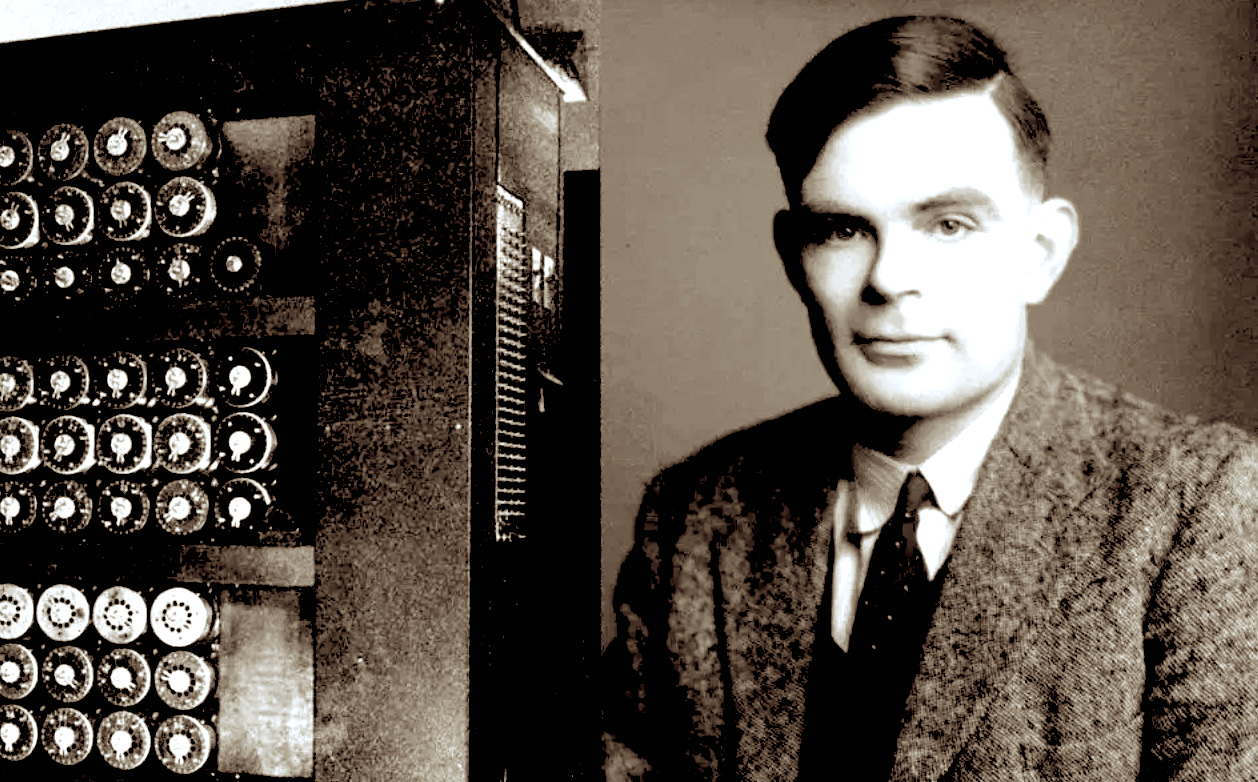
This summer, I designed and taught an online Introduction to Philosophy class that was centered around a particular theme, “Philosophy Through Thought Experiments”. The idea was to have the students engage various fields of philosophy through encountering, thinking about, and discussing a selection of famous thought experiments important in those sub-disciplines. The very last week of the class, I decided to focus on philosophy of technology, and specifically on one sort of technology that is constantly being discussed (and experienced) in our present, artificial intelligence.
I assigned three short required texts and one optional texts for that week, and produced a set of new resources upon two of them, which I am posting links to here for those who would enjoy watching or listening to the class lectures upon them. The other required text is one that I long ago produced resources on for my students, Rene Descartes’ famous discussion in part 5 of his Discourse On Method, asking whether or not machines (or for that matter, animals) can actually think in the same sense that human beings clearly can and do.
The other two required texts are classics in the field that eventually became what we now call Philosophy of Artificial Intelligence, and both of them approach the matter of artificial intelligence’s possibility at least in part by articulating a thought-experiment that long ago became part of a growing canon of literature on the topic. One of them, by Alan Turing, is the famous “imitation game”, which fairly soon became known more informally as the “Turing test”. The other, provided by John Searle, is the equally famous “Chinese room” argument.
There is considerably more to both of the articles than just the portion in which we find these two particular thought experiments articulated. In both Turing’s “Computing Machinery And Intelligence” and Searle’s “Minds, Brains, & Programs”, what we find are thoughtful considerations of what would need to be the case for us to consider a machine, and a digital computer running a program, to be capable of “thinking”, “understanding”, “learning” or other similar activities. Both Turing and Searle also consider a number of arguments and objections for and against artificial intelligence.
I produced eleven core concept videos, originally for my students, but also for the general public, on these two articles. After releasing all of those, I also took those videos and edited them into eleven corresponding Sadler’s Lectures podcast episodes. Here they are:
Alan Turing, “Computing Machinery And Intelligence”
The Imitation Game And Digital Computers | watch video | listen to podcast
Objections and Arguments | watch video | listen to podcast
Arguments From Various Disabilities | watch video | listen to podcast
Computers As Learning Machines | watch video | listen to podcast
John Searle, “Minds, Brains, & Programs”
Strong Artificial Intelligence Claims | watch video | listen to podcast
The Chinese Room Thought Experiment | watch video | listen to podcast
Clarifications About “Understanding” | watch video | listen to podcast
Response To The Systems Reply | watch video | listen to podcast
Responses To Other Replies | watch video | listen to podcast
Digital Computers And Intentionality | watch video | listen to podcast
Why People Think AIs Think | watch video | listen to podcast
Searle’s article actually contains considerably more than the early portions I produced these lectures upon, and in the future, I plan to produce more videos and podcast episodes on the other parts of that article. There are also plans to produce lectures on other early, now classic, discussions about artificial intelligence. One I’ve created those additional resources, I’ll add links to them here. For now, however, you have eleven lectures available in both podcast and video formats. I hope that you find them interesting and useful!
Gregory Sadler is the founder of ReasonIO, the co-founder of The Stoic Heart®, a speaker, writer, and producer of popular YouTube videos on philosophy. He is co-host of the radio show Wisdom for Life, and producer of the Sadler’s Lectures podcast. You can request short personalized videos at his Cameo page. If you’d like to take online classes with him, check out the Study With Sadler Academy